Economy Council of the Section for Agriculture
Working together for a sustainable agriculture
Biodynamic and organic farms are facing major challenges. The current situation brings strong headwinds, affecting not only the social climate but also ecological and economic conditions. In these demanding times, the inner certainty and confidence of many farmers are increasingly shaken. The three central challenges – social and economic uncertainty, ecological changes, and spiritual questions – are immense when considered together.
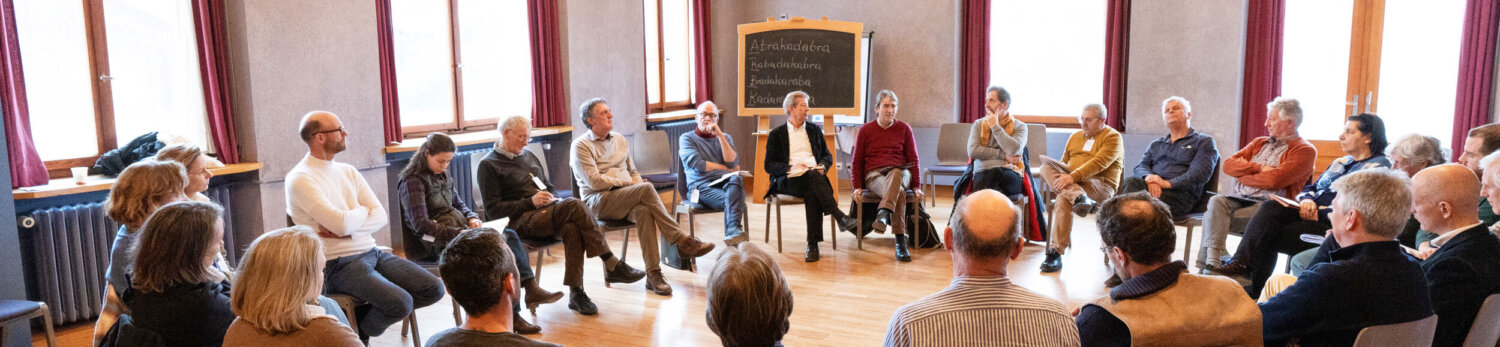
The Economic Circle, a network of 160 members from agriculture, trade, and distribution, provides a space for discussion and develops strategies to address these challenges.
In cooperation with the Goetheanum World Association, led by Andrea Valdinoci and Katharina Hofmann, regular online meetings on the "Challenges in the Organic Sector" take place. In addition, members of the Economic Circle gather once a year for an in-person meeting ahead of the Agricultural Conference.
Are you interested in exploring current economic, social, and ecological challenges and working together on solutions? Feel free to get in touch with us.
Contact
Events
Version 3.0, 2 October 2018
1. Preamble
A sustainable future society relies on an economy that allows for a holistic development of future generations, that respects our Earth as a living organism and that meets the actual needs of all human beings.
The Economy Council of the Section for Agriculture at the Goetheanum is an organ of cognition, innovation and research for the entire biodynamic movement and is not linked to the use of the Demeter brand.
2. The Principles of an Association
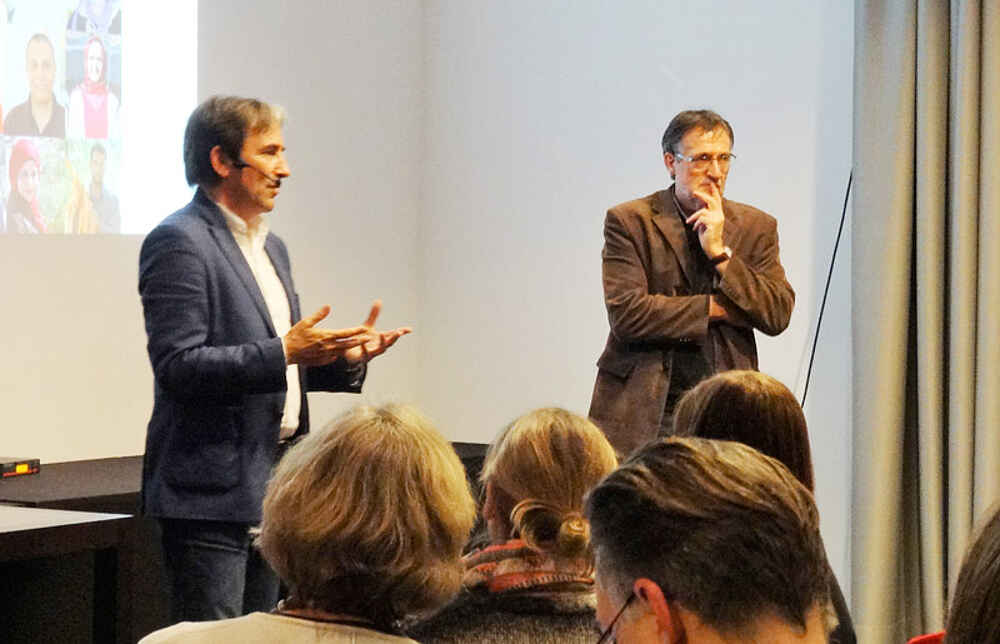
An association is a place where all actors of the value chain come together, from the producer and breeder to the consumer, whereby the mutual perception of each other as well as the joint reconciliation of interests are the driving forces for everyone involved. For this purpose, a “binding space” for periodic associative discussions, which take the form of roundtable discussions or business development talks, will be created. Also, joint training programmes concerning all relevant topics including social issues are part of the activities of an association. Participants of associative processes are, in the meaning of this Charter, first and foremost actors of the regional, national and international organic sector.
3. Topics discussed in Associations
In associative talks products and production processes are discussed as regards quantity, price and quality, the goal being to find an agreement on these issues. An overall cost calculation across the whole value chain, which should be as transparent as possible, serves as important orientation in an associative discussion.
The focus lies on a common understanding (“Bildgestaltung”) and on action research as regards:
a) Products and production processes as well as the breeding and cultivation of plants and animals
b) the people involved and their companies as well as their living conditions,
c) the meaning of (“Sinn”) and the responsibility for the success of common actions.
Additionally, an association may also deal with and decide on investments, credits and voluntary contributions. The individual actor decides autonomously and freely on its entry into a contractual associative involvement. The framework is set by legal provisions, in particular competition and antitrust laws, to which the parties involved must adhere.
4. Formal Rules Applying in Associations
An associative interaction between production, retail and consumption is put in motion as a free initiative between the actors directly involved. There is no external supervisory authority. The principle of self-declaration applies. The associative agreement will be documented for information and visibility purposes for all direct partners as well as for the Charter Community as a whole. For the time being, the Economy Council is the forum for meeting and reporting. The Economy Council will run an office for the Charter Community which coordinates and supports the associative projects. The community and the issue will be represented at the IBCD.
5. Communication
The associative work can and shall be communicated. Communication based on the Charter will be made transparent to the Community in advance. In Luxembourg a corresponding label is already registered and in use. In the future, the logo shall be free to use for the Charter Community without ruling out the possibility that it might be adjusted or that a new logo might be created.
6. The Charter
This Charter states the framework and the guiding principles for the members of the Charter Community. The realisation on site remains individual. The Charter Community is the coalition of all independent associative projects.
7. Entry into Force
The list of the initial signatories from the Assembly on 25th November 2017 in Luxemburg certifies the entry into force by this date.
The Charter's intention and call for action are supported by:
- Matthias Zaiser
- Alexander Gerber
- Koos Bakker, Cooperatie Odin
- Luuk Humblet, Mia Stockman, De Blauwe Bloem und Vereniging voor Associatieve Economie
- Änder Schanck
- Biogros, Werner Mohr
- Fördergemeinschaft Wiesbaden (vote J. Fetscher)
- Christoph Simpfendörfer, Reyerhof, Stgt, Demeter International e.V.
- Paola Santi, Di Vaira
- EcorNaturaSi, Francesco Iovine, Marco Sartorato, Fabio Brescacin, Alice Spinazzé
- Jana Gapihan, Konsumentin
- Sabrina Ultes, Naturata, Konsumentin
- Jonas Vach (Trainee Naturata)
- Peter Neessen, Hof Belgien
- Sascha Damaschun, Bodan GmbH
- Mirko Music, Kalcek,SLO
- Martin von Mackensen
- Boris Voelkel
- Andreas Höritzauer, Wegwartehof und Demeter Österreich
- Sonny Gottal, oikopolis
- Volker Manz, Biog
- Tanja Both, Naturata
- Elisabeth Niklowitz, Konsumentin
- Peter Altmayer, Naturata
- Joachim Gabriel, Erzeugergem. Getreide
- Herbert Voelkle
- Katja Assmann
- Slawomir Chlon, Organic Farma Zdrowia S.A.
- Jos Schanck
- Patrick Kolbusch Biogros
- Udo Herrmannstorfer, Konsument
- Peter Kunz
- Klaus Wais, VDE Markt GmbH
- Sigmund Walbaum, Naturata
- Ilsabé Zucker
- Leon Tietz, Student Alanus Hochschule
- Oskar Döllinger, Traditionsbrauerei Schleicher
- Helmy Abouleish, Sekem
- Thea Gabriel, Hof Stedebach, Demeter e.V.
- Joachim Gabriel
- Ueli Hurter, Sektion für Landwirtschaft
- Peter Sanktjohanser, Naturata
- Jasmin Peschke, Sektion für Landwirtschaft
- Anna van der Laan, Studentin Alanus Hochschule
- Daniel von Meissner
- Simone Helmle
- Alexander Schröder, Märkisches Landbrot
Luxemburg, 25th November 2017 (Version 1.0)