Agroecology as a model for the future

Agroecology as a model for the future

22 October 2024

Agroecology as a model for the future

Created by Lukas Maschek | |   Research

How widespread are agroecological practices, and what impact do they have? Using the Netherlands as an example, Verkuil et al. explore these questions. The researchers developed and tested an "Agroecology Index." Their results show that agroecological practices not only benefit the environment but can also increase income stability.

There are a variety of agroecological practices. These include the closing of nutrient cycles, the avoidance of chemical pesticides, the combination of animal husbandry and crop cultivation on one farm and the promotion of biodiversity. Different farming systems utilise these practices to varying degrees. Biodynamic agriculture fits very well into the system of agroecology due to its basic ecological principles and the high requirements for certification.

The authors of the study analysed data from 735 farms in the Netherlands and developed an ‘’Agroecology Index‘’. The index is based on six of the FAO's 10 elements of agroecology. Their results show that the average level of application of agroecological principles in the Netherlands is 36.6%. This value varies greatly between farms. The spatial differences make it possible to create a map of the Netherlands with ‘bright spots’ and ‘dark spots’, i.e. areas with a high or low implementation of agroecological practices respectively.
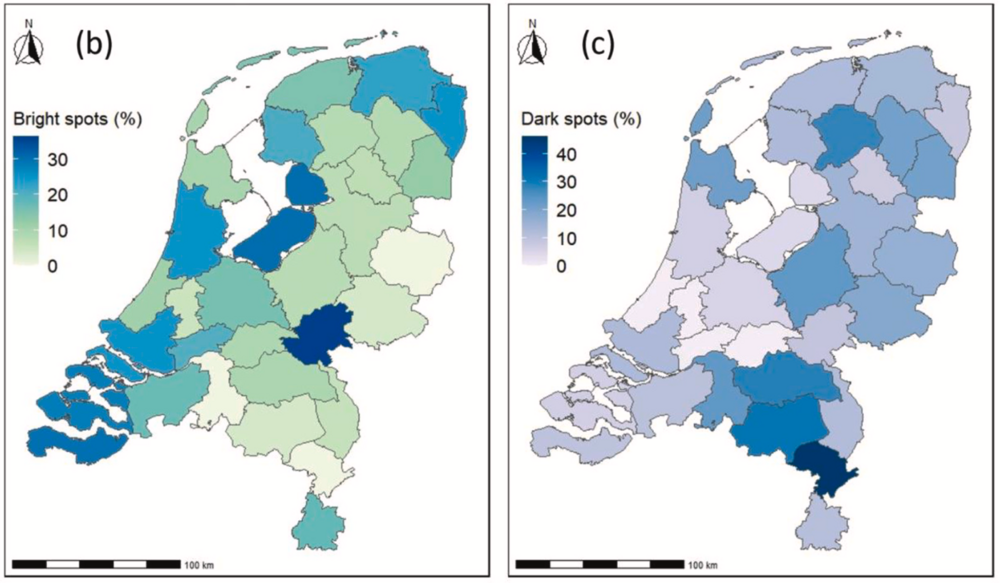
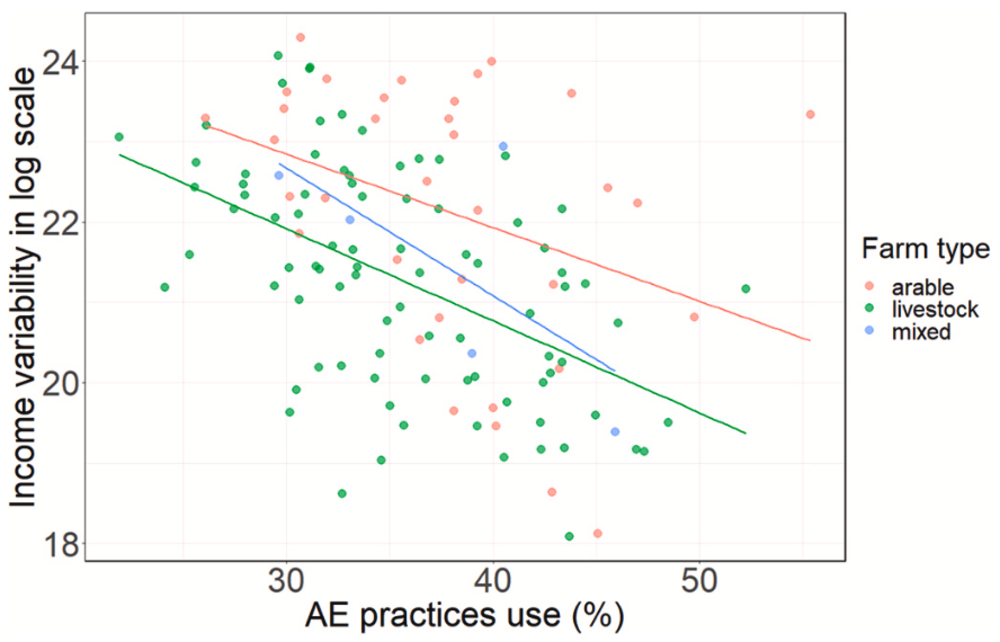
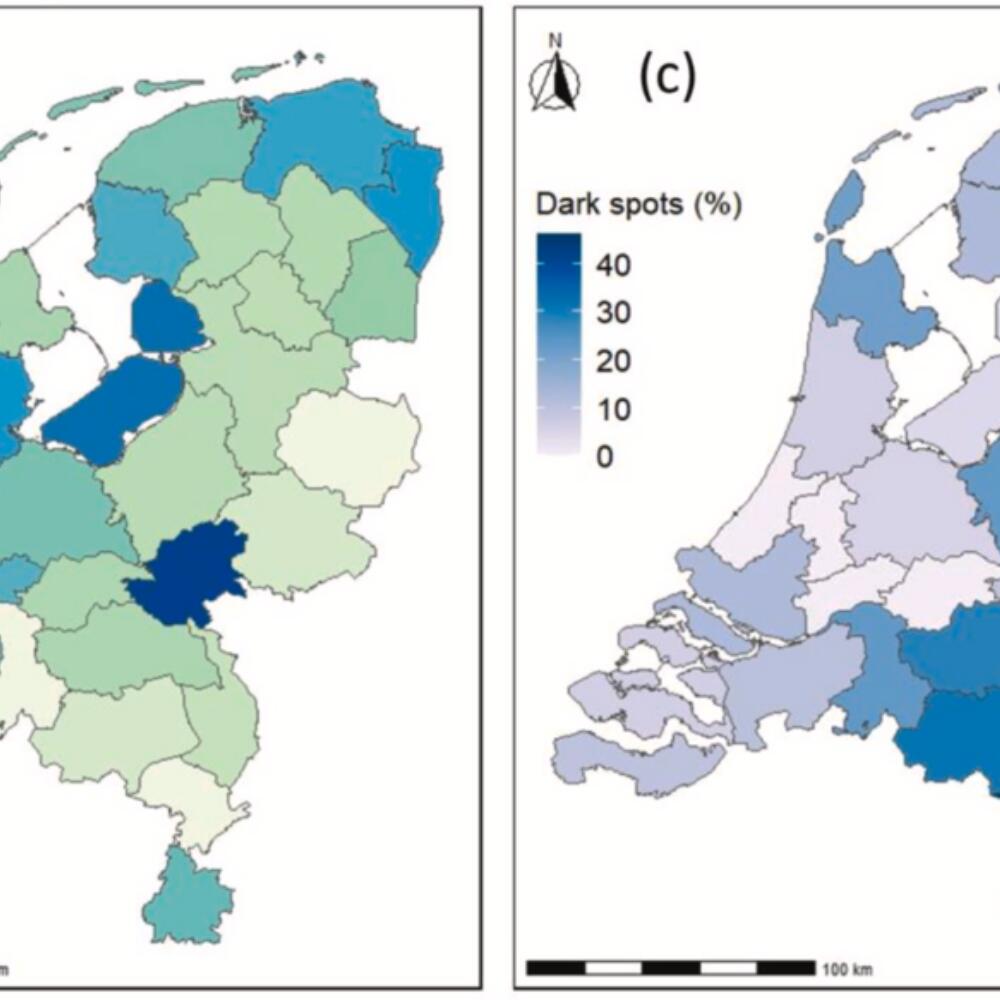
Figure 1 ( excerpt): Spatial distribution of agroecological principles in the Netherlands. Regions with above-average (left) or below-average (right) use of agroecological practices on the respective farms.

The study also shows that a higher rate of adoption of agroecological principles correlates with a more stable income situation. This correlation exists for all farm types and sizes, but is most pronounced for mixed farms that combine both crop and livestock farming. Increased income stability is of particular importance in view of increasing economic and climatological uncertainty.

From the perspective of biodynamic farms, an interesting aspect is that they perform particularly well in the synergy and diversity categories. The results of the study also show that biodynamic approaches can enable a combination of ecological and economic benefits. Unfortunately, the study does not provide detailed information on specific agroecological practices. Furthermore, the results are not applicable beyond the Dutch borders. However, the creation of an Agroecology Index that can measure the implementation of agroecological practices across different farming systems is of great value for future studies of this kind.

Figure 2: Application of agroecological practices (x-axis) and income variability (y-axis) for different farm types.


Sources and further links for this article

  • Original study:
    Verkuil, L. A., Verburg, P. H., Levers, C., Stratton, A. E., Schulp, C. J. E. Bright spots of agroecology in the Netherlands: A spatial analysis of agroecological practices and income stability. Agricultural systems, Vol. 220, 2024, 104086. https://doi.org/10.1016/j.agsy.2024.104086
  • The study is covered by Creative Commons (link to license) and has been summarized for this study report.
  • «Agroecology Knowledge Hub» of the FAO
Back