
Biodynamic preparations influence the biochemical soil properties and the quality of potatoes
The aim of the three-year research project by Vaitkevičienė et al. was to evaluate the effect of the biodynamic preparations 500 and 501 on the biological and chemical properties of the soil and the quality of potatoes. Three potato varieties were investigated for the study: Blue Congo, Red Emmalie and Vitelotte.
Biodynamic preparations influence the biochemical soil properties and the quality of potatoes
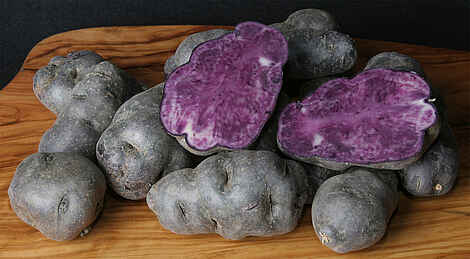 Foto von 'Cschleiermacher' at 'English Wikipedia'. Lizenz: CC BY-SA 3.0, via Wikimedia Commons
Summary
The soil samples were analysed for available phosphorus, available potassium, ammonium nitrogen, nitrogen (sum of nitrate and nitrite), and mineral nitrogen.
- Phosphorus, potassium, and nitrogen are primary macronutrients. Their availability in the soil is particularly important for healthy plant development.
The potato samples were analysed for total phenolic compounds, total anthocyanin content, and free radical activity.
- Phenols are a variety of chemical compounds. In plant cultivation, they often occur as flavouring substances and determine the smell and taste of vegetables and fruits.
- Anthocyanins are plant pigments that, depending on their concentration, lead to a red, violet or blue colour. Anthocyanins also belong to the group of antioxidants.
- The activity against free radicals is a biological defence mechanism against cell damage. Important substances for this defence are, for example, antioxidants.
The highest concentrations of phosphorus, potassium, nitrogen and mineral nitrogen available in the soil throughout the growing season were detected on the 14th day after the soil application of preparation BD 500 (before planting the potatoes). In addition, spray application of preparation BD 500 onto the soil resulted in higher enzyme activity. When preparation BD 501 was applied, the content of total phenolic compounds in the tubers of Blue Congo and Red Emmalie was significantly higher than in plants which were not treated with BD 501, at 20.1% and 5.4% respectively; the content of anthocyanins was significantly higher in the tubers of all three tested varieties. However, the application of preparation BD 501 did not influence the content of total phenolic compounds and the antioxidant activity of the Vitelotte tubers. When both biodynamic preparations (500+501) were applied, significant effects were only measured in the accumulation of anthocyanins in the tubers of Blue Congo and Vitelotte. The application of the BD 500 preparation alone significantly reduced the anthocyanin content in the tubers of the cultivars Red Emmalie and Vitelotte.
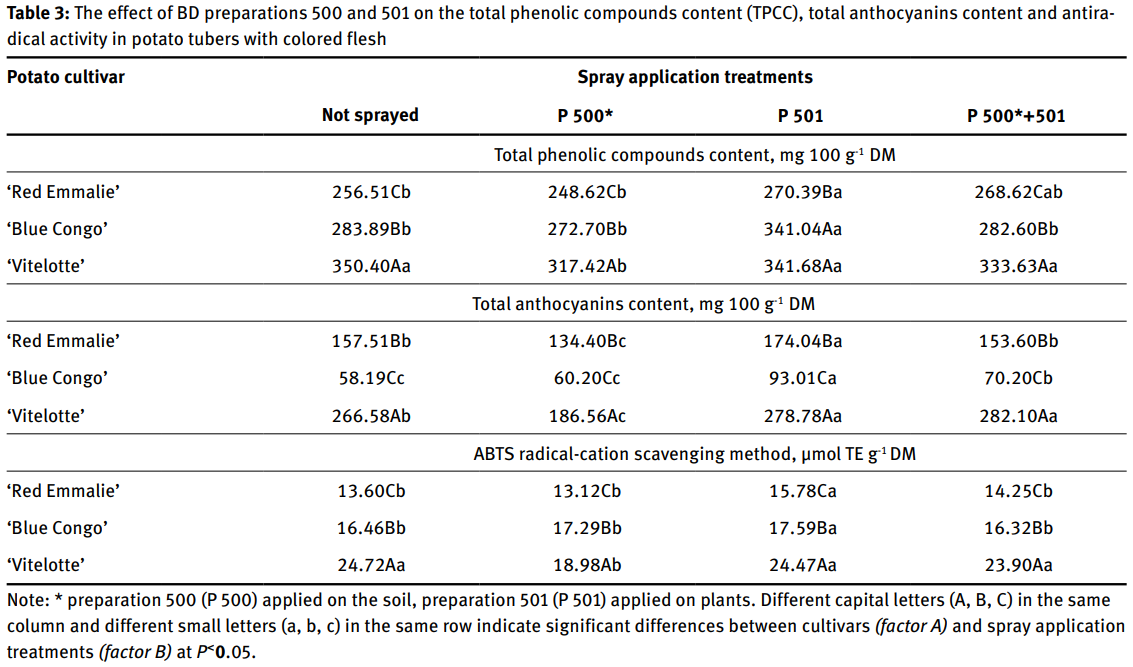
Figure 1: Overview of the measured values of total phenolic compounds, anthocyanins and free radical activity for the control group ("Not sprayed") and for the applications of P 500 and P 501. P 500 was applied to the soil and P 501 to the plants.
Conclusions
The results indicate that the application of biodynamic preparation 500 promoted the activity of soil enzymes (saccharase and urease) and increased the plant availability of nutrients important for growth (available phosphorus, sum of nitrate and nitrite nitrogen, and mineral nitrogen) in the soil.
In terms of chemical composition, the tubers of the Vitelotte variety proved to be the most interesting: they accumulated the significantly highest levels of phenolic compounds and anthocyanins, and were characterised by the clearest activity against free radicals. The application of preparation BD 501 to the potato plants had a positive effect on the total accumulation of anthocyanins, total phenolic compounds and antioxidant activity in the tubers of the Blue Congo and Red Emmalie varieties. In the tubers of Vitelotte, however, the biodynamic preparation 501 had no significant effect on the total phenolic compounds and the antioxidant activity. The combined application of both preparations (BD 500 + BD 501) only showed positive effects for the accumulation of anthocyanins in the tubers of Blue Congo and Vitelotte. The application of preparation BD 500 significantly reduced the anthocyanin content in the tubers of Red Emmalie and Vitelotte and the total phenolic compounds in the tubers of Vitelotte.
Publication details
Authors: Vaitkevičienė, N., Jarienė, E., Ingold, R. and Peschke, J.
Title: Effect of biodynamic preparations on the soil biological and agrochemical properties and coloured potato tubers quality
Journal: Open Agriculture, vol. 4, no. 1, 2019, pp. 17–23
Link (Open Access): https://doi.org/10.1515/opag-2019-0002
This study summary is based on the article «Effet des préparations biodynamiques sur les propriétés biologiques et chimiques du sol, ainsi que sur la qualité des pommes de terre» and was produced with the kind permission of Martin Quantin, Biodynamie Recherche.
Further study summaries on the topic of biodynamic preparations can be found here: