Demeter in the bottle, but not on the label

Demeter in the bottle, but not on the label

14 January 2025

Demeter in the bottle, but not on the label

Created by Lukas Maschek | |   Sektion für Landwirtschaft

Many Swiss farmers voluntarily refrain from marketing their wines under a biodynamic or organic label, even though they meet the relevant requirements. This is the result of a study conducted in 2024.

For this study, Zachmann et al. surveyed 436 winegrowers about their production methods. The surveys were conducted in all  geographic areas , wine regions and language areas of Switzerland. The results show that of the 115 wineries that produce either organically or biodynamically, 43.5% do not market their products under a corresponding label. Of the 27 biodynamic farms, only half use a Demeter label.

What are the reasons for such a decision? Certifications and labels are associated with both financial and administrative costs. Smaller farms or those with a low income from viticulture often decide against a biodynamic or organic label, as the possible price premiums do not justify the increased costs. In addition, many farmers who choose not to use organic labels use alternative labels, such as for fungus-resistant varieties. These labels require less effort and are nevertheless associated with sustainability features. The type of marketing also plays a role: direct marketers often communicate their sustainable practices personally, without labels.
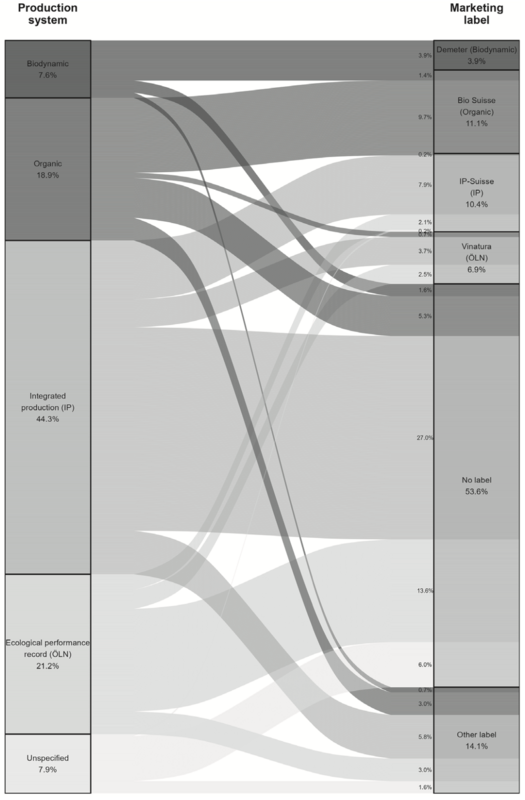
Figure 1: Comparison of production systems (left) and affiliation to marketing labels (right). 53.6% of the 436 farms surveyed do not belong to any label.

The study shows that the prevalence of organic products is underestimated by sales statistics, as not all sustainably produced wines are labeled accordingly. It is also clear that the incentive of labels such as Demeter or Bio Suisse is often not enough to have a farm certified accordingly.

Commentary

From the perspective of biodynamics, the study is particularly exciting because it sheds light on the tension between sustainable production methods and their marketing. Although biodynamic and organic approaches share similar principles such as the avoidance of synthetic chemicals and the promotion of biodiversity, the study shows that economic and operational factors significantly influence the way in which a product is marketed. The study thus encourages reflection on how biodynamics can make its principles more visible and whether more flexible approaches, such as regional or specialized labels, could promote the acceptance and dissemination of biodynamic products.


Sources and further links to this article

  • Original study:
    Zachmann, L., McCallum, C., Finger, R. Farm characteristics determine why a large share of organically produced wine is not labelled as organic. 2024 Environmental Research Communications. 6 115028
    http://dx.doi.org/10.1088/2515-7620/ad9383
  • The study is covered by Creative Commons (link to license) and was summarized for this study report.