‘And so even the most materialistic farmer today (…) can roughly calculate in how many decades the produce will have degenerated to such an extent that, even within the course of this century, it will no longer be fit as food for people.’ This is what Rudolf Steiner reported in June 1924 regarding the agricultural course he had recently delivered to farmers in Koberwitz (Kobierzyce) near Breslau (Wroclaw).¹
Almost exactly a century later, a question from the field of nutritional science sounds astonishingly similar – even if the language used is completely different.
‘The body of available evidence supports the thesis that the displacement of long-established dietary patterns by ultra-processed foods is a key driver of the global rise in the burden of numerous diet-related chronic diseases.’ This is how Carlos A Monteiro puts it, an epidemiologist and professor emeritus of nutrition and public health at the Universidade de São Paulo, Brazil, and one of the founders of the NOVA classification*.
The two approaches could hardly be more different. And yet they pose a similar fundamental question: what happens when foods provide energy but do not equally support satiety, metabolism and health – in other words, when they fail to provide stimulation?
What are ultra-processed foods?
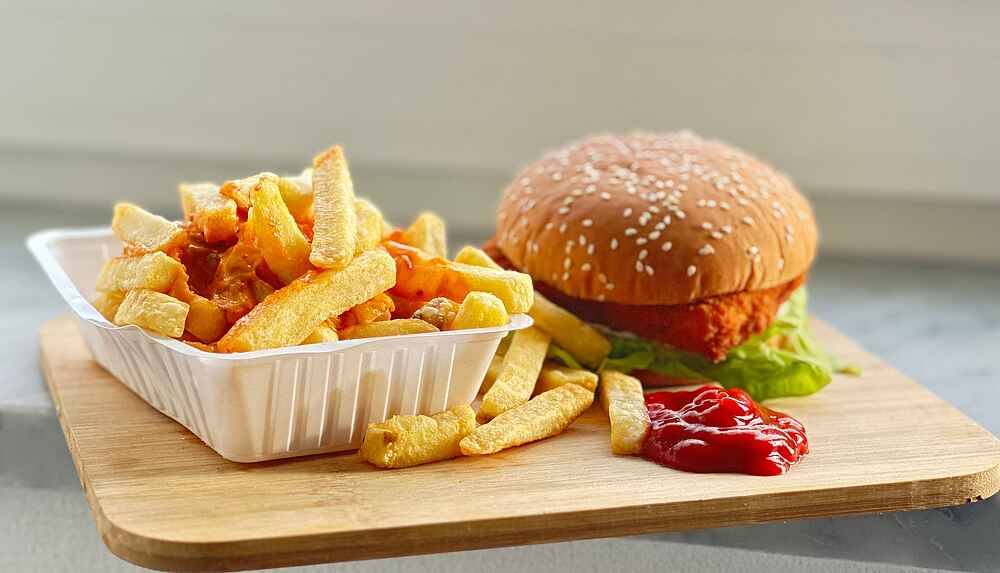
Ultra-processed foods – UPFs for short – have now become not just a product category but a field of research in their own right. They refer to industrial formulations composed of various processed ingredients that are transformed into finished products through recipe, processing, additives and, frequently, flavourings. To put it bluntly: they are ‘edible products’ rather than food in the traditional sense. Typical UPFs include soft drinks, industrial biscuits, cakes and sweets, crisps, snacks, instant products, ready meals, ready-made sauces and dressings. Products with a healthy image can also fall into this category, such as certain muesli and protein bars, fruit yoghurts or fruit pouches. It is not just industrial production that is decisive, but the combination of ingredients and processing methods.²
What are the effects of UPFs?
Research now paints a clear picture: high consumption of UPFs is associated with an increased risk of various chronic diseases. The links with overweight and obesity, type 2 diabetes and cardiovascular diseases are particularly consistent. Links with increased overall mortality have also been observed repeatedly. In addition, there is evidence linking them to mental health conditions, sleep problems, certain respiratory diseases and types of cancer. There is also evidence for other conditions, albeit with varying levels of strength of evidence.²,³
However, the epidemiological data initially answer only one question: that a link exists. They do not yet explain why. Is it down to energy density, food texture, eating rate, composition, additives, or a combination of factors acting together?
The food matrix
A food is more than the sum of its nutrients. The structure in which these nutrients are present is also crucial.
Grinding, chopping, puréeing or extruding alter the food matrix. This can change the effort required to chew, eating rate, digestion, gastric emptying and the rate of nutrient absorption.² In contrast, with minimally processed or unprocessed foods, the original structure is largely preserved – for example, in vegetables, fruit, pulses, nuts or whole grains.
A controlled dietary study demonstrated just how significant this can be: on an ultra-processed diet, adults spontaneously consumed significantly more energy than on an unprocessed diet consisting of whole foods – on average around 500 kilocalories per day – and gained weight.⁴
Energy density, eating rate and satiety
Many UPFs have a high energy density and are, at the same time, soft, easy to chew and quick to eat. This means that a lot of energy can be consumed in a short space of time before the satiety signals take full effect and one stops eating.⁵
A traditional meal, by contrast, can promote satiety through its nutrient composition and food texture: protein, fibre, water content and the composition of fats play just as much a role in this as texture and the effort required to chew. We eat foods, not nutrients, and every food is more than the sum of its nutrients. It is interesting that the different effects of the two are recognised by conventional nutritional science.
But why are certain UPFs eaten so readily and with such relish? This is where palatability comes into play. The English word ‘palatable’ simply means pleasant or tasty. In many industrial products, this taste sensation is created by combinations of fat, sugar, salt and intense flavourings. A home-cooked meal, on the other hand, can also be very tasty, whilst often offering a greater variety of flavour nuances and textures, and – particularly when it comes to flavour enjoyment – does not encourage overeating.⁶ However, once the sense of taste has been dulled, it is difficult to perceive the flavour of natural products in all its facets.
It becomes particularly interesting when a more simplified and intense palatability is combined with high energy density, minimal chewing effort, quick consumption and constant availability. Research distinguishes between ‘liking’ – how pleasant something tastes – and ‘wanting’ – how strongly we want to eat something. Both processes are involved in the brain’s reward and motivation systems.⁶ Industrial products evidently tend to appeal more to ‘wanting’, because after consumption, the feeling arises that one must eat more and more.
The question, therefore, is not whether UPFs simply ‘taste better’, but whether an industrial formulation with high energy density, intense palatability and ease of consumption makes high energy intake particularly easy – or even triggers it.⁵
What is missing – and what is added?
Many UPFs contain less natural fibre and a lower variety of plant-based foods than a balanced, varied diet comprising fresh fruit and vegetables, pulses and whole grains. This can also lead to a reduced intake of various phytochemicals.2
Additionally, there are other possible factors: additives, changes to the gut microbiome and exposure to endocrine-disrupting chemicals from food packaging, such as phthalates or bisphenols. There is experimental evidence from the natural sciences for some of these factors.⁷,8 However, the extent to which they actually contribute to the health effects of UPFs has not yet been clarified.
Rudolf Steiner’s view on the degeneration of food
Steiner viewed nutrition from a completely different perspective. For him, a foodstuff did not consist solely of chemically analysable components. He himself stated that the essential aspect of nutrition was not the nutrients, but the forces contained within a foodstuff and the stimulating effect they exerted.9 Thus, life forces or formative forces play a central role; these are associated with the etheric, that is, the level of the living.
From this perspective, the quality of a foodstuff would not be judged solely on the basis of its material composition; rather, its vitality plays a crucial role. Cultivation, processing and preservation all influence this. From this, dynamic dietetics developed the idea that extensive processing and preservation can diminish or destroy life forces, ultimately leaving behind a kind of ‘dead matter’. This is the case with UPFs, as has also been demonstrated in studies.10
Formative forces, or vitality, can meanwhile be scientifically demonstrated using various methods such as biocrystallisation or fluorescence excitation spectroscopy.
It is interesting to note that modern nutritional science now also goes beyond classical nutrient analysis: it examines the food matrix, satiety, metabolism, the microbiome and the potential effects of additives and packaging materials. And it even takes planetary health into account.
In doing so, it does not speak of ‘life force’, but examines physiological processes. Yet one question is remarkably topical and links both approaches:
Is it sufficient to assess a foodstuff on the basis of its individual nutrients – or does the way in which these nutrients are organised, processed and presented to people in a foodstuff also determine its effect?
*NOVA classification: NOVA 1: minimally processed foods, NOVA 2: processed ingredients (e.g. oil, flour), NOVA 3: processed foods (e.g. bread), NOVA 4: highly processed foods (e.g. ready meals, snacks)
Sources:
1 Steiner R. (2022). Landwirtschaftlicher Kurs, 9th ed., p. 242. Rudolf Steiner Verlag.
2 Monteiro CA et al. (2025). Ultra-processed foods and human health: the main thesis and the evidence. The Lancet, 406(10520), 2667–2684. DOI: 10.1016/S0140-6736(25)01565-X.
3 Lane MM et al. (2024). Ultra-processed food exposure and adverse health outcomes: umbrella review of epidemiological meta-analyses. BMJ, 384:e077310. DOI: 10.1136/bmj-2023-077310.
4 Hall KD et al. (2019). Ultra-Processed Diets Cause Excess Calorie Intake and Weight Gain: An Inpatient Randomised Controlled Trial of Ad Libitum Food Intake. Cell Metabolism, 30(1), 67–77.e3. DOI: 10.1016/j.cmet.2019.05.008.
5 Fazzino TL et al. (2023). Ad libitum meal energy intake is positively influenced by energy density, eating rate and hyper-palatable food across four dietary patterns. Nature Food, 4, 144–147. DOI: 10.1038/s43016-022-00688-4.
6 Møller P. (2015). Taste and appetite. Flavour, 4, 4. DOI: 10.1186/2044-7248-4-4.
7 Chassaing B et al. (2022). A randomised controlled feeding study of the dietary emulsifier carboxymethylcellulose reveals detrimental impacts on the gut microbiota and metabolome. Gastroenterology, 162(3), 743–756. DOI: 10.1053/j.gastro.2021.11.006.
8 Tanzer M et al. (2025). Migration of phthalates, bisphenols and per- and polyfluoroalkyl substances from food packaging into food: a systematic review. Reviews on Environmental Health, 40(3), 616–625. DOI: 10.1515/reveh-2025-0027.
9 Steiner R. (2022). Landwirtschaftlicher Kurs, 9th ed., p. 74. Rudolf Steiner Verlag.
10 J Wohlers, P Stolz, U Geier (2024): ‘Intensive processing reduces the quality of grains: a triangulation of three assessment methods’, Biological Agriculture & Horticulture,
DOI: 10.1080/01448765.2023.2295868