Fungal networks in vineyards - Biodynamics increases soil fertility

Fungal networks in vineyards - Biodynamics increases soil fertility

09 October 2024

Fungal networks in vineyards - Biodynamics increases soil fertility

Created by Lukas Maschek | |   Research

How do different agricultural systems influence grapevines and wine quality? Ana Aguilar-Paredes et al. analysed fungal networks in Chilean vineyards for this 2024 study. The researchers hypothesised that biodynamic and organic farming increase the diversity of soil fungi, which form a symbiotic relationship with the roots of the vines. The results of the study support this hypothesis.

Viticulture is of great economic importance in Chile. Like many other plants, grapevines also form a symbiotic relationship with fungi living in the soil, known as mycorrhizal fungi. The fine fungal networks can access nutrients that are not available to the plant roots and in exchange receive metabolic products from the vines, such as sugar. In addition to nutrient uptake, mycorrhizal fungi also promote the water balance and disease resistance of the vines - an important factor in view of climate change, which leads to extreme temperatures and periods of drought, among other things.

As part of the study, the roots of conventional and organically cultivated vines were examined microscopically for colonisation by mycorrhizal fungi. A biodynamic vineyard was also part of the data collection. Conventional vines showed a colonisation of 6 % to 31 %, while organic and biodynamic vines were colonised by 20 % to 35 %. In addition, organically and biodynamically cultivated vines showed a higher diversity of fungi. A total of 12 species of mycorrhizal fungi were found.
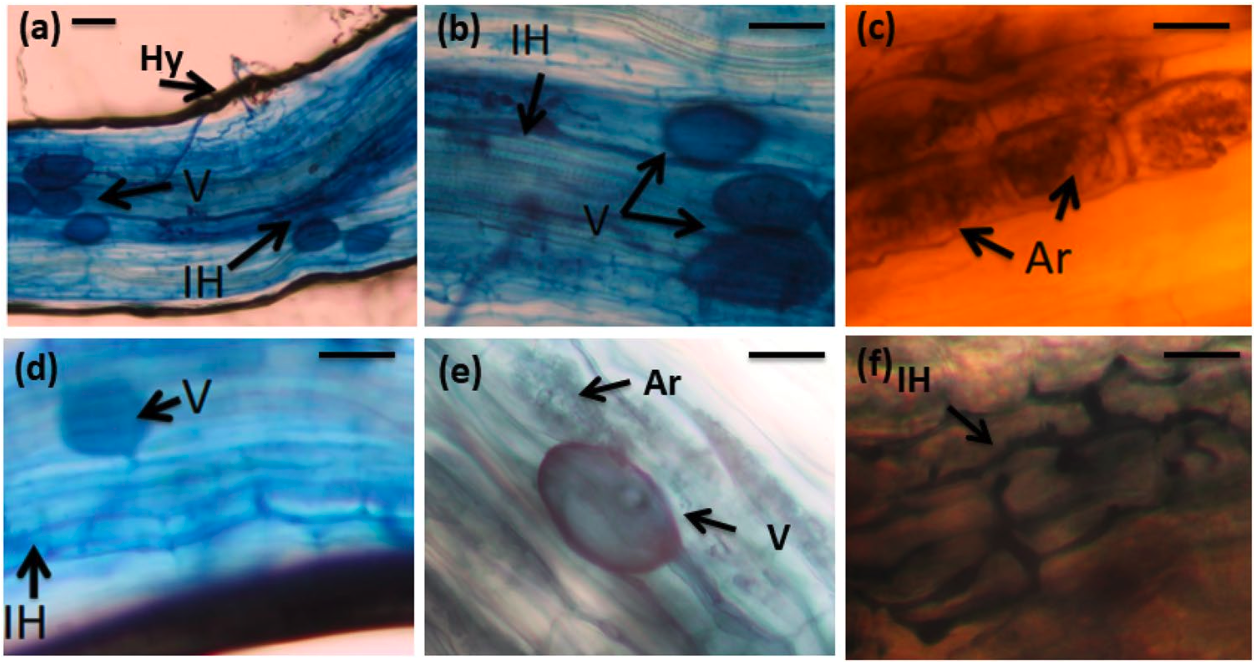
Figure 1: Different mycorrhizal structures in root samples of grapevines. Hy: hyphe (fungal filament), IH: intercellular hyphe, Ar: arbuscule (tree-shaped hyphal structure), V: vesicle ( bubble-shaped fungal cell).

The avoidance of chemical fertilisers and pesticides and the use of compost appear to favour the conditions for fungal colonisation. This promotes a diverse and stable soil ecosystem, which in turn benefits the vines. Improved stress resistance and nutrient uptake can also be reflected in the quality of the resulting wines. Mycorrhizal fungi are also associated with the formation of secondary plant substances, which are important for the flavour of the grapes.

The present study supports the assumption that the promotion of a healthy soil ecosystem - a core concern of biodynamics and organic farming - improves plant health and increases the quality of agricultural products. However, the extent to which these effects are directly influenced by the farming method remains unanswered in this study. A long-term study would increase the robustness of the study results and the inclusion of several biodynamic test plots would be desirable. However, there is no doubt that organic and biodynamic farming promote the health of the vines.


Sources and further links to this article

  • Original study: Aguilar-Paredes, A., Turrini, A., Avio, L., Stuardo, C., Velásquez, A., Becerra, J., Giovannetti, M., Seeger, M. Agricultural Managements Influence the Diversity of Arbuscular Mycorrhizal Fungi in Vineyards from Chilean Mediterranean Climate Ecosystems. J Soil Sci Plant Nutr 24, 6099–6112 (2024). https://doi.org/10.1007/s42729-024-01963-y
  • The study is covered by Creative Commons (link to the license) and has been summarized for this study report.