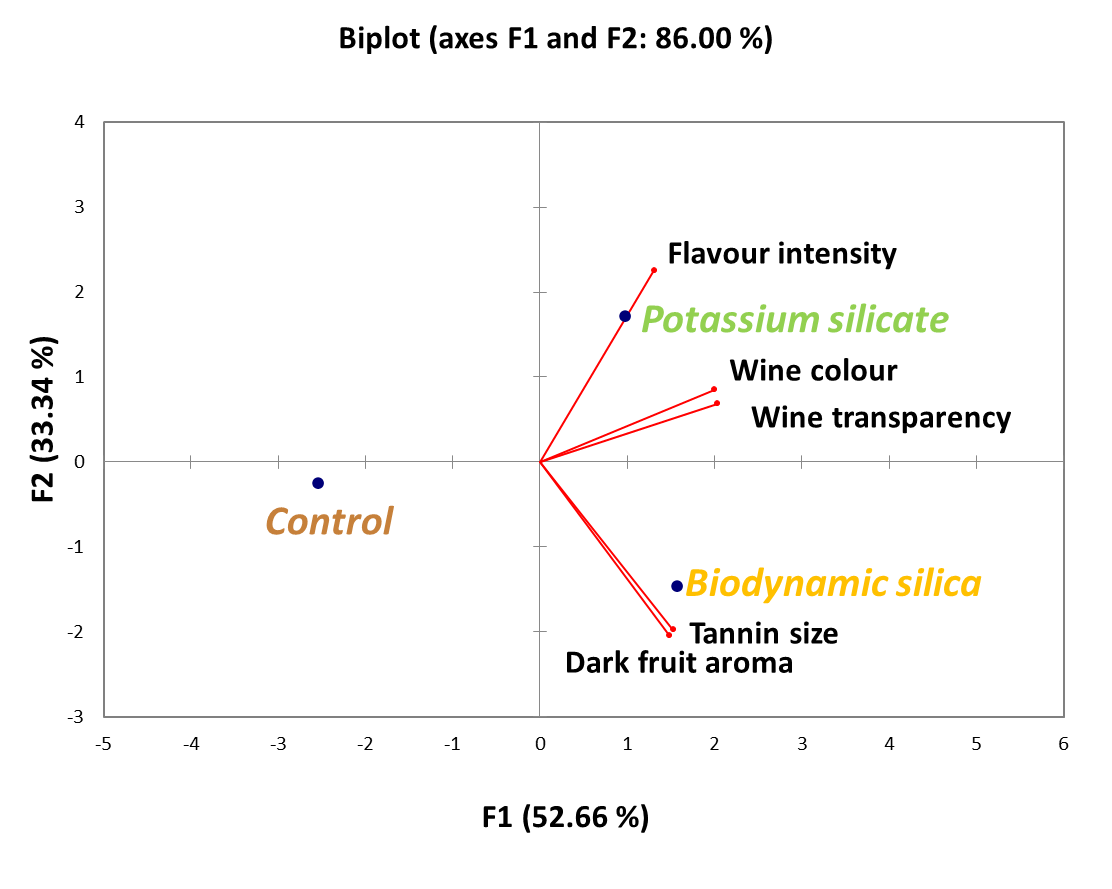
How does silicon affect the growth of grapevines and the quality of the grapes? An Australian research team led by Cassandra Collins is investigating this question. In their current study from 2024, the researchers are investigating how the application of biodynamic and commercial silica-based products affects various parameters of the vines and grapes. In addition to the analytical examination of the grapes, a blind tasting was also carried out.
Silicon is not a macronutrient in plant cultivation, but it nevertheless fulfils important physiological functions. It strengthens plants' resistance to disease and stress, promotes growth, and has a positive effect on fruit characteristics. In biodynamic agriculture, silicon is particularly well known as the main component of preparation 501.
The results of the present study show that the application of silicon has a positive effect on the vines studied. Both the commercially available potassium silicate and the biodynamic spray preparation BD501 led to stronger cell walls compared to the control group, making the treated vines more resistant to environmental stress. In addition, qualitative improvements were observed in the grapes in terms of their aromas and the flavour of the wine.
The researchers conclude that silicon could play a key role in plant health, for example in terms of reducing the need for synthetic pesticides and fertilisers. The research results suggest that silica-based treatments
- can naturally enhance plant health,
- supports the resilience of vines to abiotic stress,
- promotes soil quality.