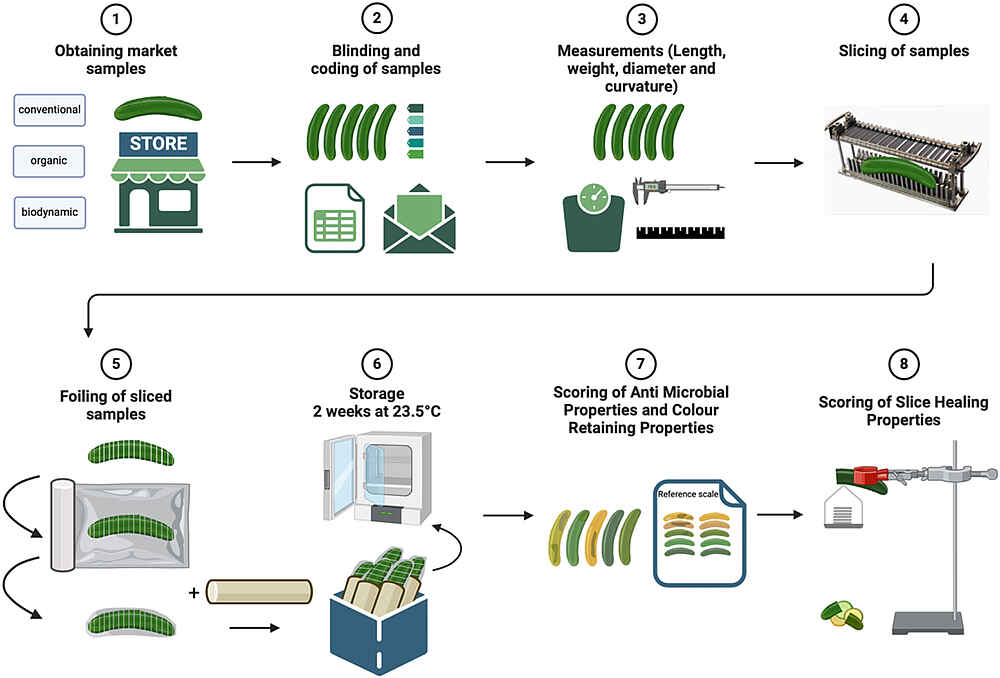
Figure 1: Experimental setup. First, the different cucumbers are coded, measured and cut. After two weeks of storage, a further examination is carried out.
Specifically, the stress storage test examines three parameters: antimicrobial properties, color retention and wound healing of the cut surfaces. These are intended to record the reaction of the cucumbers to unfavorable storage conditions. Each cucumber was cut into 15-20 mm thick slices and stored under standardized conditions at 23.5° C for 14 days. The color loss, microbial load and wound healing of the slices were then evaluated. To determine wound healing, the cucumber slices were wrapped in foil to keep them in shape during storage. Subsequently, weights were applied to the re-grown cucumber to measure the force required to separate the cucumber slices again.
The experiments were carried out in three laboratories located in Denmark, Germany and Switzerland. The cucumbers used were sourced from local supermarkets, health food stores and local markets.
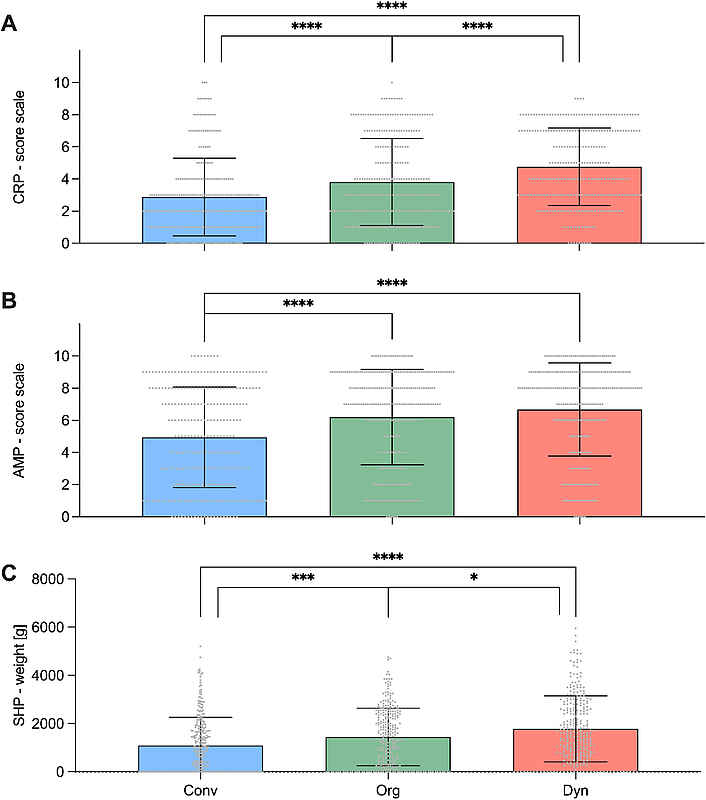
The results show that biodynamically grown cucumbers performed best in all three categories, followed by organic and finally conventional samples. In 58 to 71 % of the experiments, the biodynamic samples showed the best shelf life under stress conditions, while conventional cucumbers were only ahead in 4 to 8 % of the cases. The organically grown cucumbers showed the best results in 25 to 38% of cases. The biodynamic cucumbers showed significantly better values for color retention and wound healing in particular. In addition, a considerably higher dry matter content was measured for biodynamic and organic cucumbers in comparison to conventional cucumbers.
Figure 2: Evaluation of the stress storage tests. A: color retention properties, B: antimicrobial properties, C: healing capacity of the cucumber slices. Cultivation systems: Conv: conventional, Org: organic, Dyn: biodynamic. The asterisks indicate the statistical significance level: ****: p < 0.0001, ***: p < 0.001, **: p < 0.01, *: p < 0.1.
These differences could be explained by the higher concentration of secondary plant substances and a stronger plant defense against microorganisms. Biodynamic preparations in particular appear to have a positive influence on the plant microbiome and thus increase resistance to environmental stress and pathogens. A higher concentration of secondary plant substances could also explain the higher dry matter content in biodynamic and organic cucumbers.
Comment
The higher resistance of biodynamic cucumbers can be interpreted as an indication of good health and intact plant defenses. The study also confirms earlier findings that biodynamic preparations such as horn manure and horn silica have a positive influence on the soil microflora and can contribute to improving plant quality and health. However, it is not clear from the study whether the improved storage properties of the cucumbers go hand in hand with an increased nutritional value. In addition, more comprehensive data and analyses on production conditions, the plant microbiome and secondary plant substances would be desirable. Overall, the study results suggest that the cultivation method has a significant influence on the vitality of the cucumbers. From the perspective of biodynamics, it is particularly interesting that the parameters tested are closely linked to the concept of vitality, a central biodynamic aspect.
Sources and further links to this article
- Original study:
Doesburg-van Kleffens, M., Andersen, J.-O., Gründemann, C., Fritz, J. Effects of cultivation systems on the antimicrobial, colour retainment and slice healing properties of consumer ready market samples of cucumber (Cucumis sativus L.). Applied Food Research, Volume 5, Issue 1, 2025.
https://doi.org/10.1016/j.afres.2025.100754 - Study report «Benefits thanks to unique bacterial communities in the biodynamic praparations»
- Studienbericht «DOK study compares soil quality of different cropping systems after 42 years of agricultural use»
- The study is covered by Creative Commons (link to license) and has been summarized for this study report.