Where biodynamics is taking root

Where biodynamics is taking root

28 April 2025

Where biodynamics is taking root

Created by Lukas Maschek | |   Sektion für Landwirtschaft

How has biodynamics developed and spread around the world over the last 100 years? John Paull and Benjamin Hennig's 2020 study is the first to provide an area-based world map of biodynamic agriculture. To this end, they determined all biodynamically farmed areas worldwide and represented them graphically using a Peters projection. The resulting biodynamic world map provides an insight into the spread of biodynamic agriculture and shows some enormous differences between countries, regions and continents.

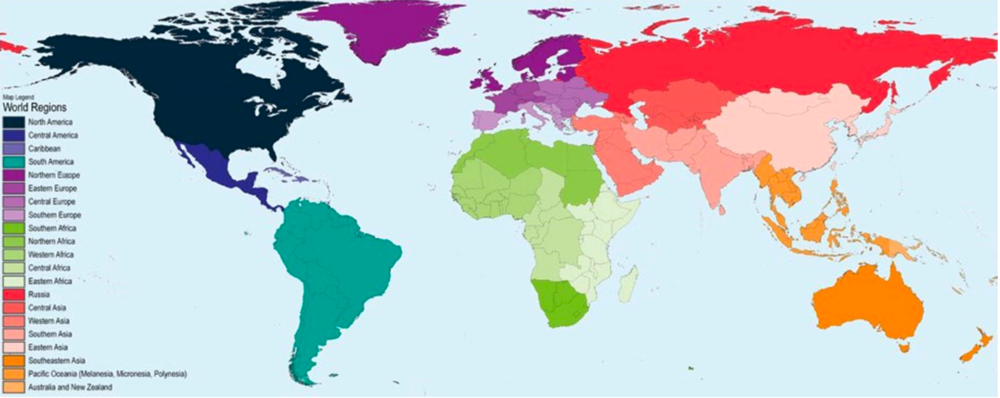
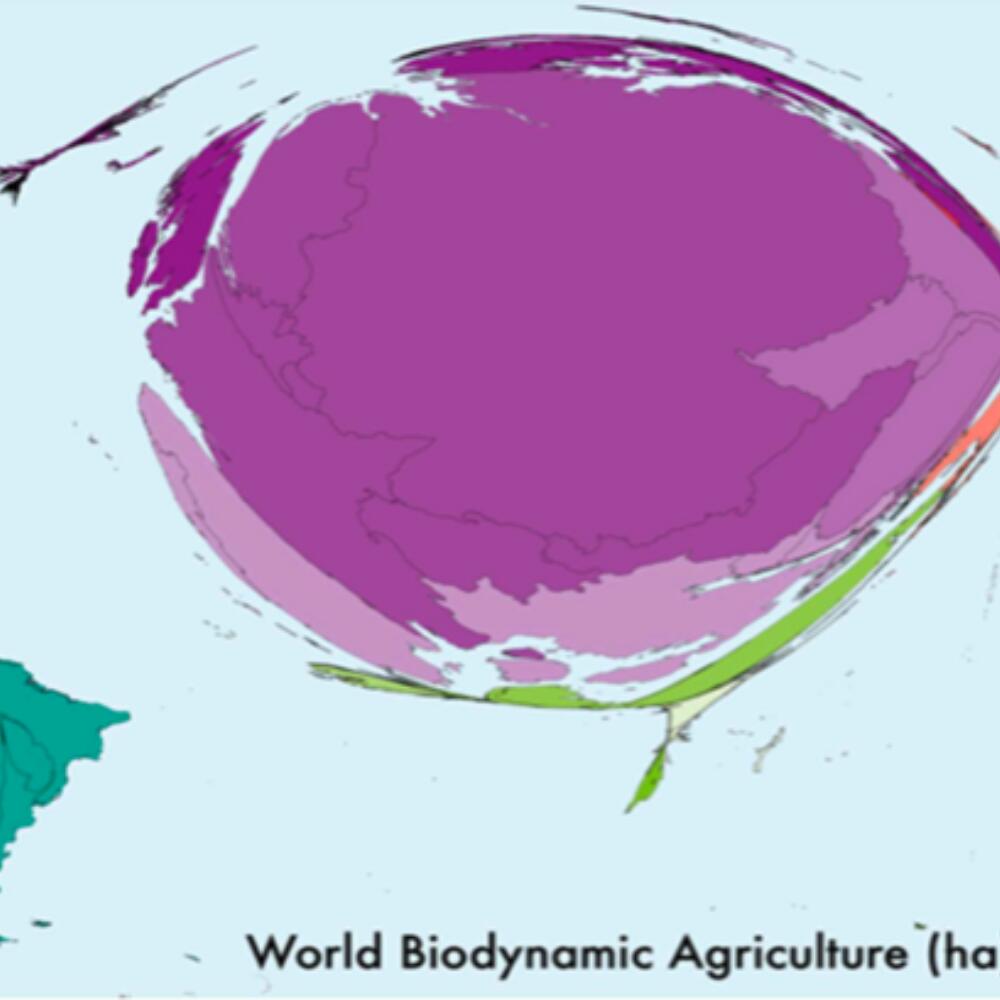
For this cartographic representation, a total of 55 countries were taken into account, in which over 250,000 hectares of certified biodynamic land exist. Most of the data comes from Demeter International, supplemented by previously unpublished information from Australian Demeter certification bodies. As a visualization method, the authors chose a density- equalizing area projection (Peters projection), in which countries are distorted proportionally to their biodynamic hectares: Countries with an above-average density of biodynamic areas are inflated, while countries with a below-average density are shown at a reduced size.
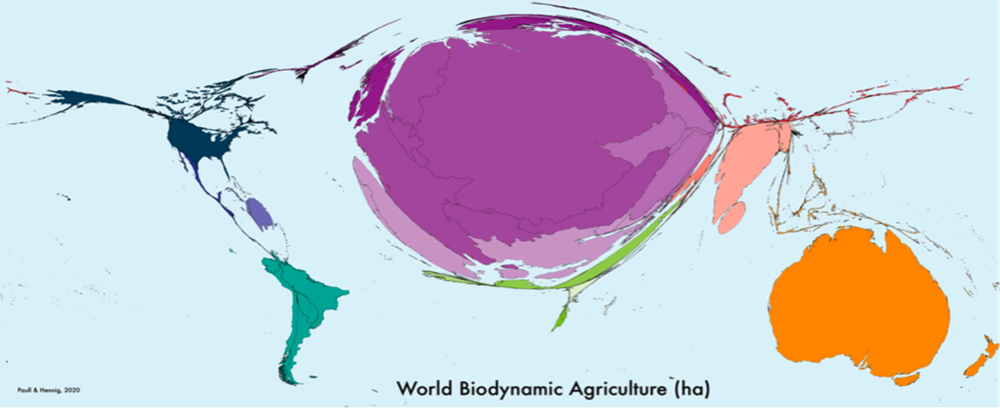
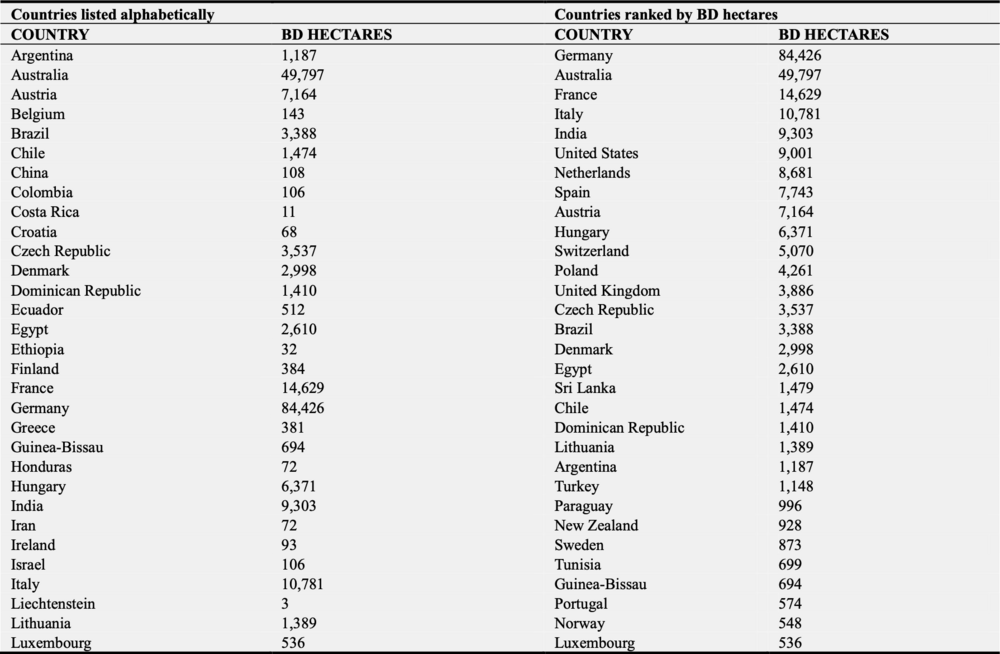
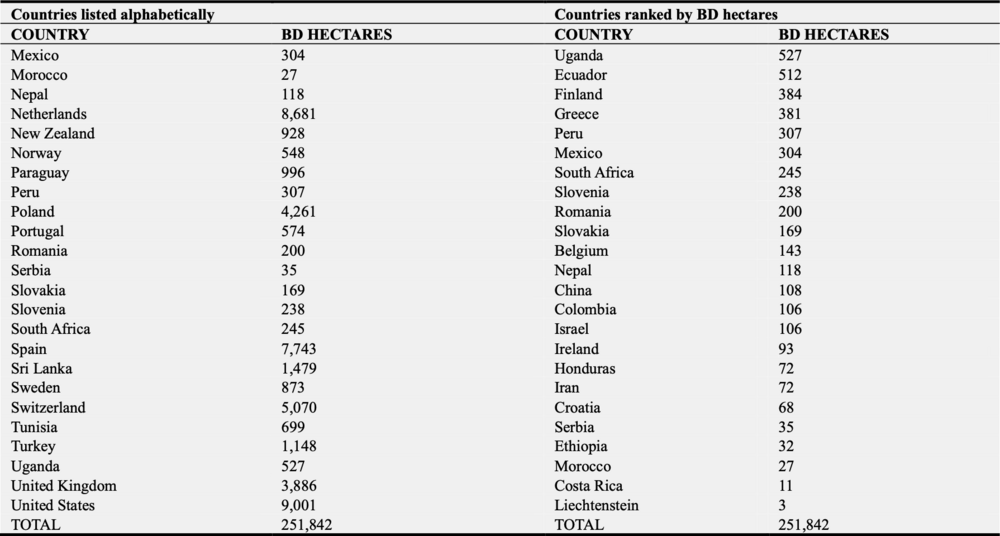
The biodynamic world map shows a clear European dominance and a very uneven global distribution (Figure 1). In terms of area, Germany leads with 34% of the world's biodynamic areas, followed by Australia (20%) and France (6%), while countries such as Russia and China appear to be vanishingly small. Switzerland is in 11th place with just over 5,000 hectares. A complete list of countries and area figures can be found in the table below.

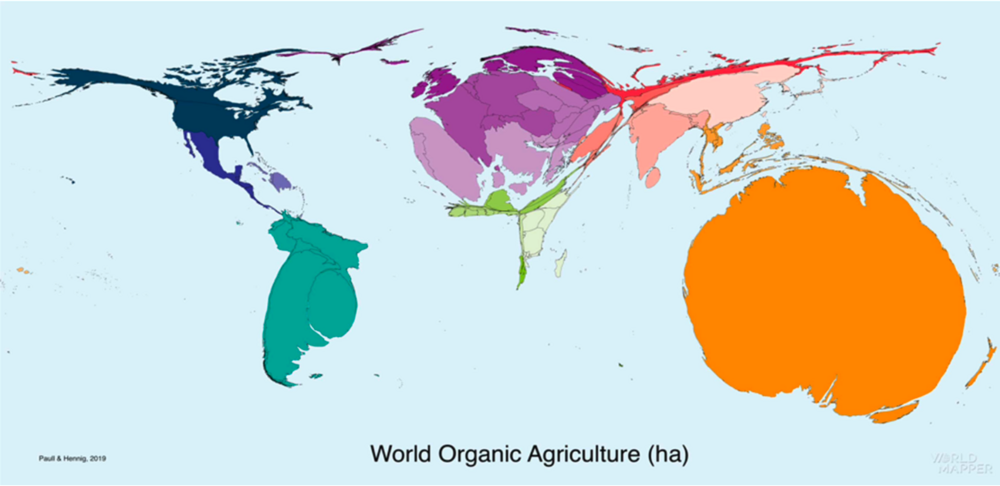
Figure 2 shows that the global distribution of organic agriculture is somewhat more even than that of biodynamic agriculture. Here too, Europe and Australia account for an above-average share of global organic land.

Globally, biodynamic areas account for only 0.35% of all organically farmed land. However, these figures only include certified farms that work according to Demeter guidelines. Such certification is associated with effort and costs. For smaller farms in particular, this effort is often not worthwhile, or they join another biodynamic label. In such cases, these farms are not included in the statistics presented here.

Comment
Rudolf Steiner's impulse of 1924 continues to have an impact worldwide: a quarter of a million hectares are now certified according to biodynamic standards, even if the absolute areas are small compared to organic farming. However, the graph only shows the current global spread of biodynamics. A development dynamic cannot be derived from such a snapshot.

In addition, since the data were collected in 2020, many farms have been added that practice biodynamic methods, often without Demeter certification. The actual figures for biodynamic farms and farmland are therefore likely to be significantly higher. That said, this study provides a new perspective on the global biodynamic movement. The way in which data is presented can broaden our understanding and contribute to the transfer of knowledge.


Sources and further links to this article